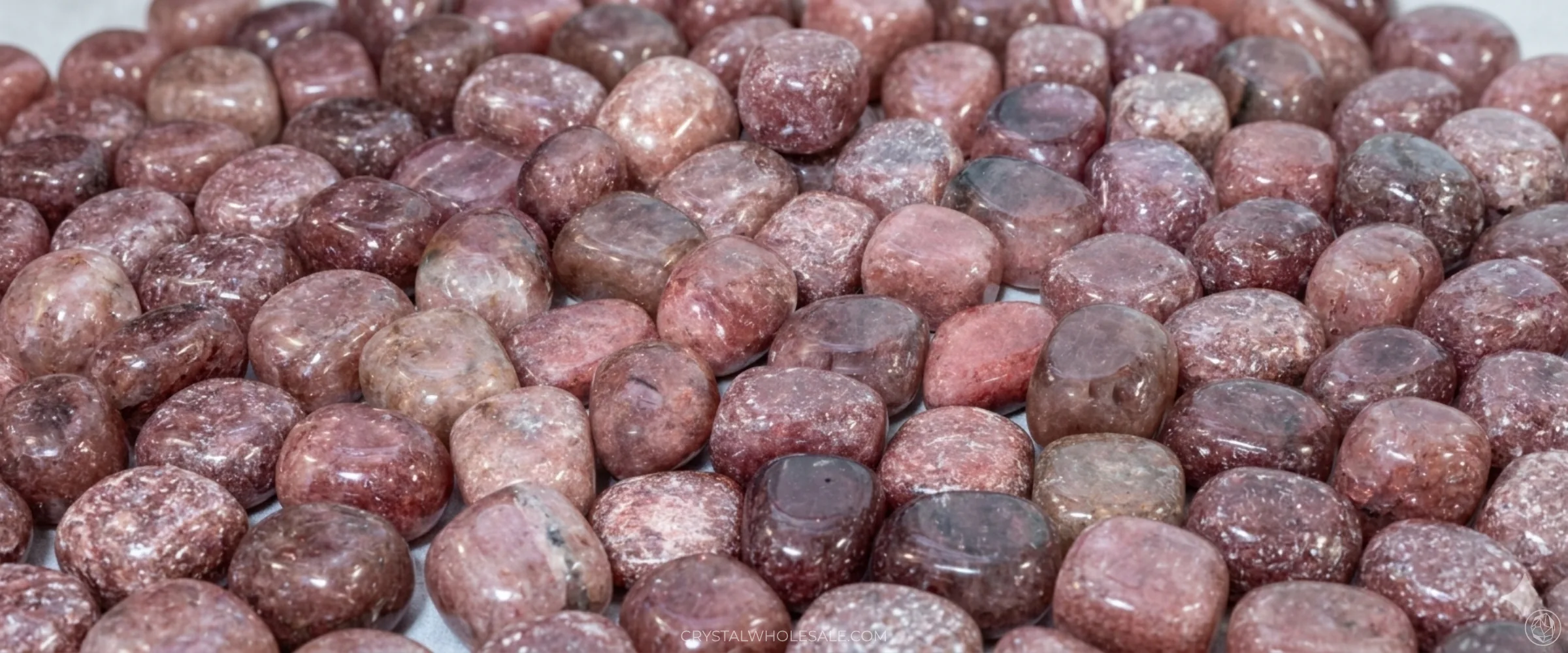

Strawberry Quartz Model
$4.16 ~ $5.20


Meaning, Healing Properties, Mineralogy & History




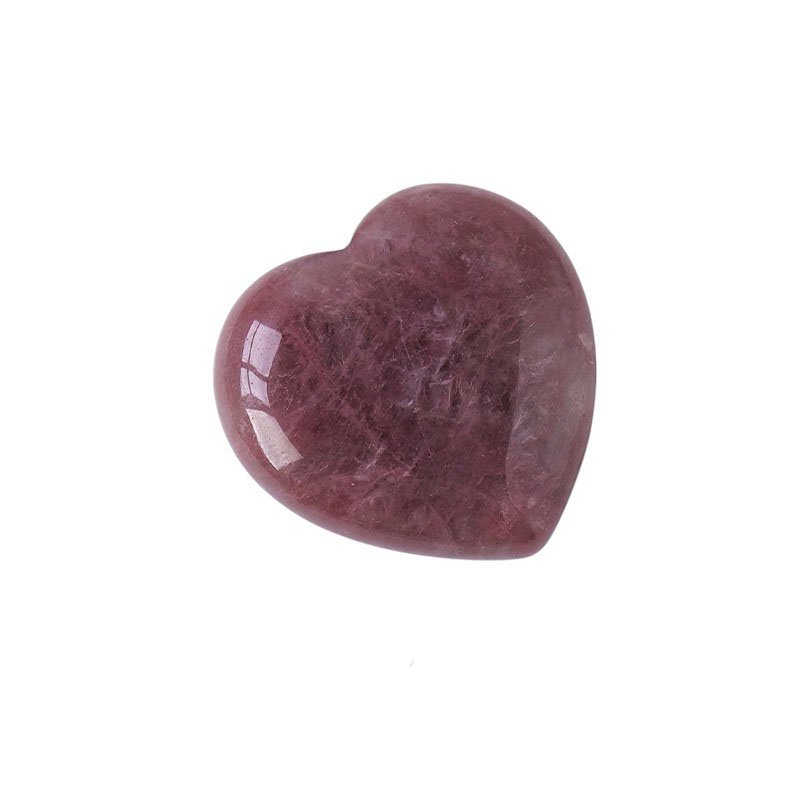
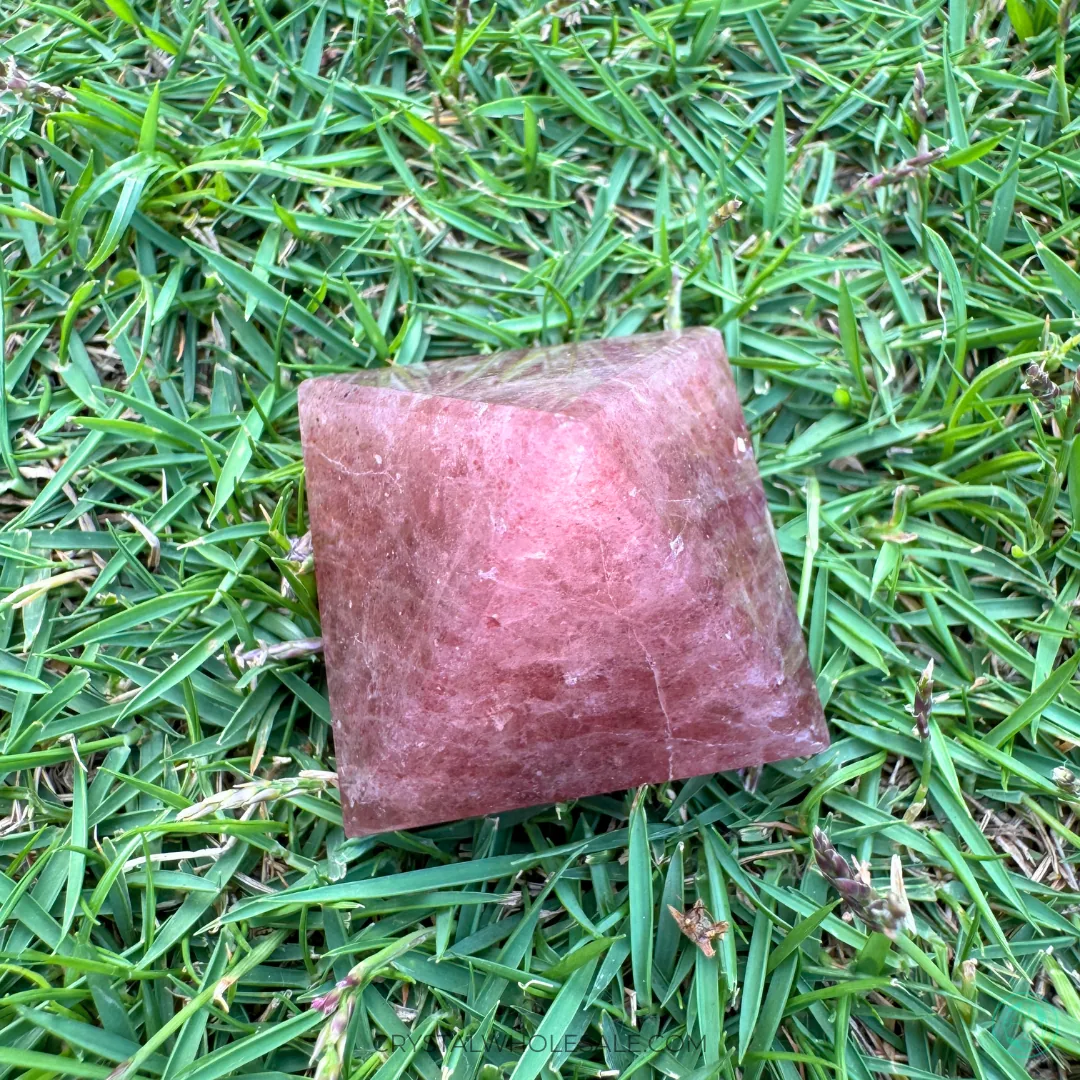
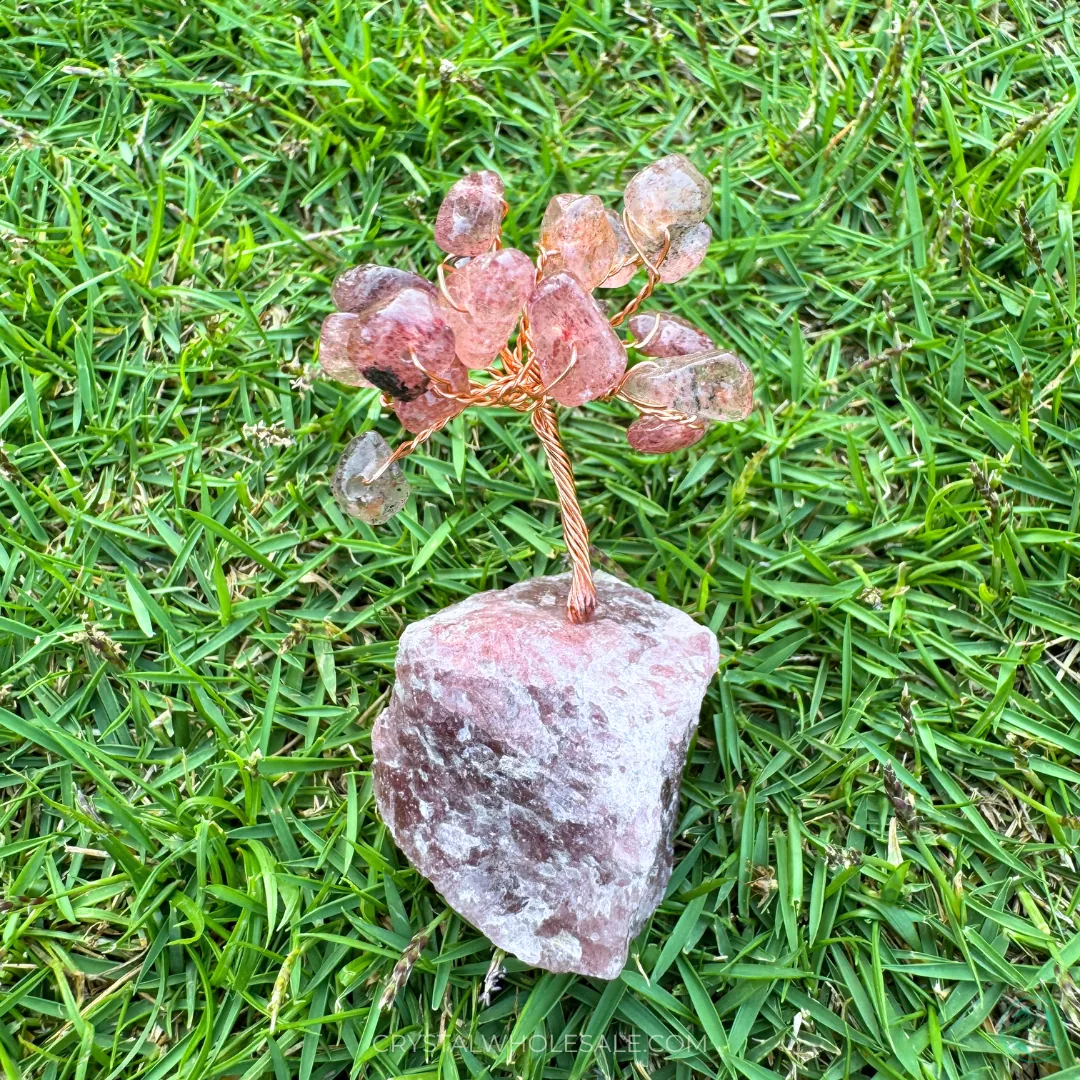
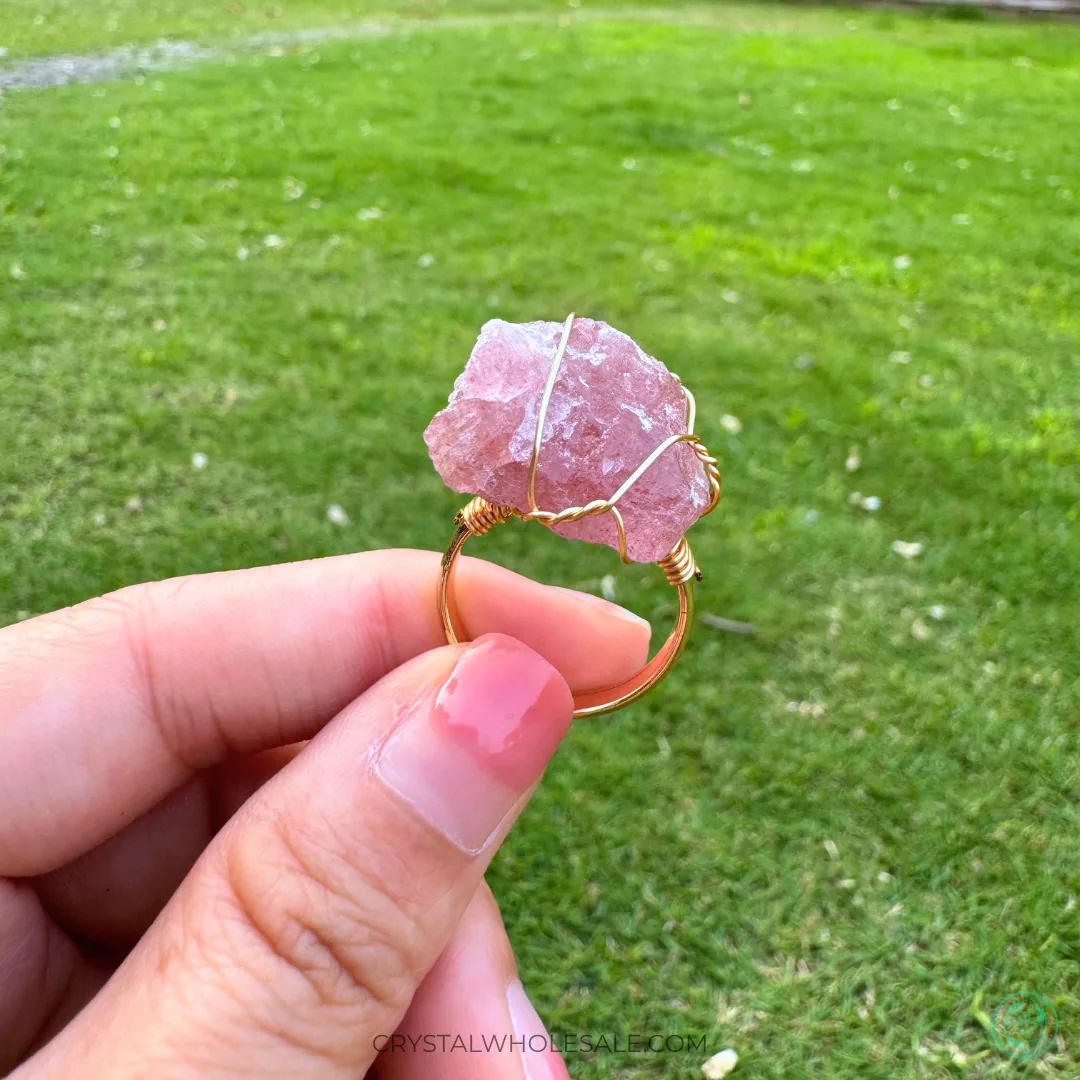
Strawberry quartz is a natural crystal material made primarily of quartz, with visible red to pink inclusions inside. It usually appears transparent to translucent, with internal red-pink patterns that may look dotted, flaky, finely scattered, or cloud-like. Together, these inclusions create a look that resembles the color and seed-like detail of a strawberry, which is why it is called Strawberry Quartz.
Its primary composition is silicon dioxide. The color and distinctive appearance of strawberry quartz come from the distribution and reflective effect of red to pink mineral inclusions within the crystal. These inclusions give it a range of tones, from soft pink and berry pink to deeper reddish pink, while also creating natural variation in clarity, color depth, and internal texture from piece to piece.
The core meaning of strawberry quartz centers on gentle love, joy, appreciation, and a softer flow of emotion.
Its meaning goes beyond love alone. It also speaks to self-acceptance, kindness, gentle interaction in relationships, and a deeper sensitivity to the beautiful things in everyday life. The feeling it carries is warm, delicate, and approachable, offering emotional support that helps the inner state gradually return to a softer and steadier place.
In chakra work, strawberry quartz connects most directly with the Heart Chakra, so it is often understood through the lens of love, emotional healing, harmony in relationships, and inner softness. At the same time, its red-pink tones and warmer visual energy create a natural link with the Root Chakra, adding a sense of stability, grounding, and support alongside its emotional gentleness. Because of this, the meaning of strawberry quartz reaches beyond romantic love and also speaks to emotional warmth and inner steadiness.
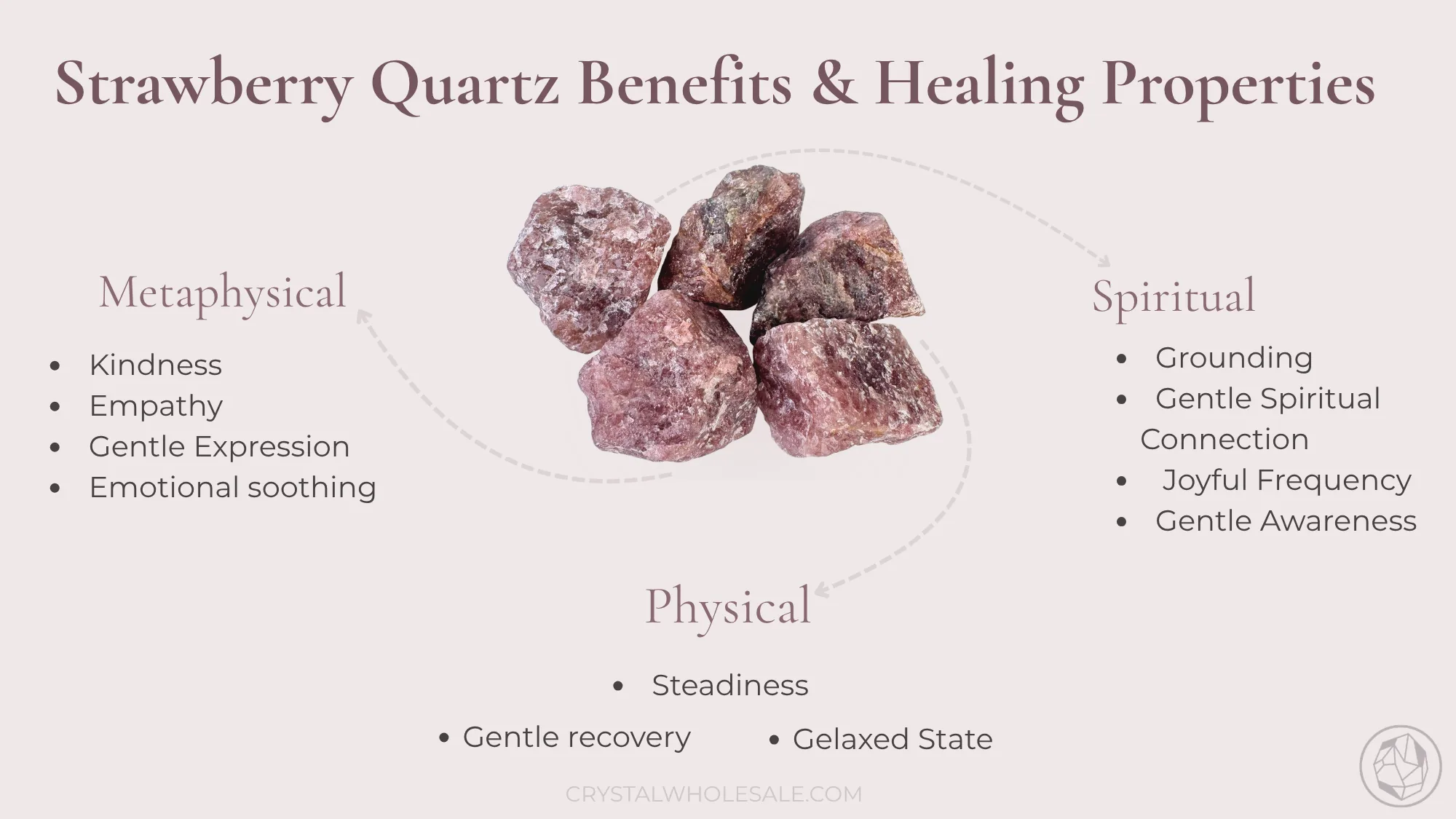
On an emotional and mental level, strawberry quartz supports kindness, empathy, gentle expression, and emotional soothing. It brings attention back inward, making it easier to recognize real feelings and respond to them with more softness. For those who stay in states of tension, sensitivity, overthinking, or emotional repetition for long periods, strawberry quartz offers a sense of support that helps release what has been held too tightly and brings emotions back to a calmer, more open state.
Its support for kindness applies both inwardly and outwardly. When a person is under strain, softness is often the first thing to go. Strawberry quartz helps slow the inner tone, ease emotional sharpness, and restore the ability to understand, accept, and care for oneself. In daily life, that shift can make emotional processing feel smoother and create more room to step out of cycles of inner tension.
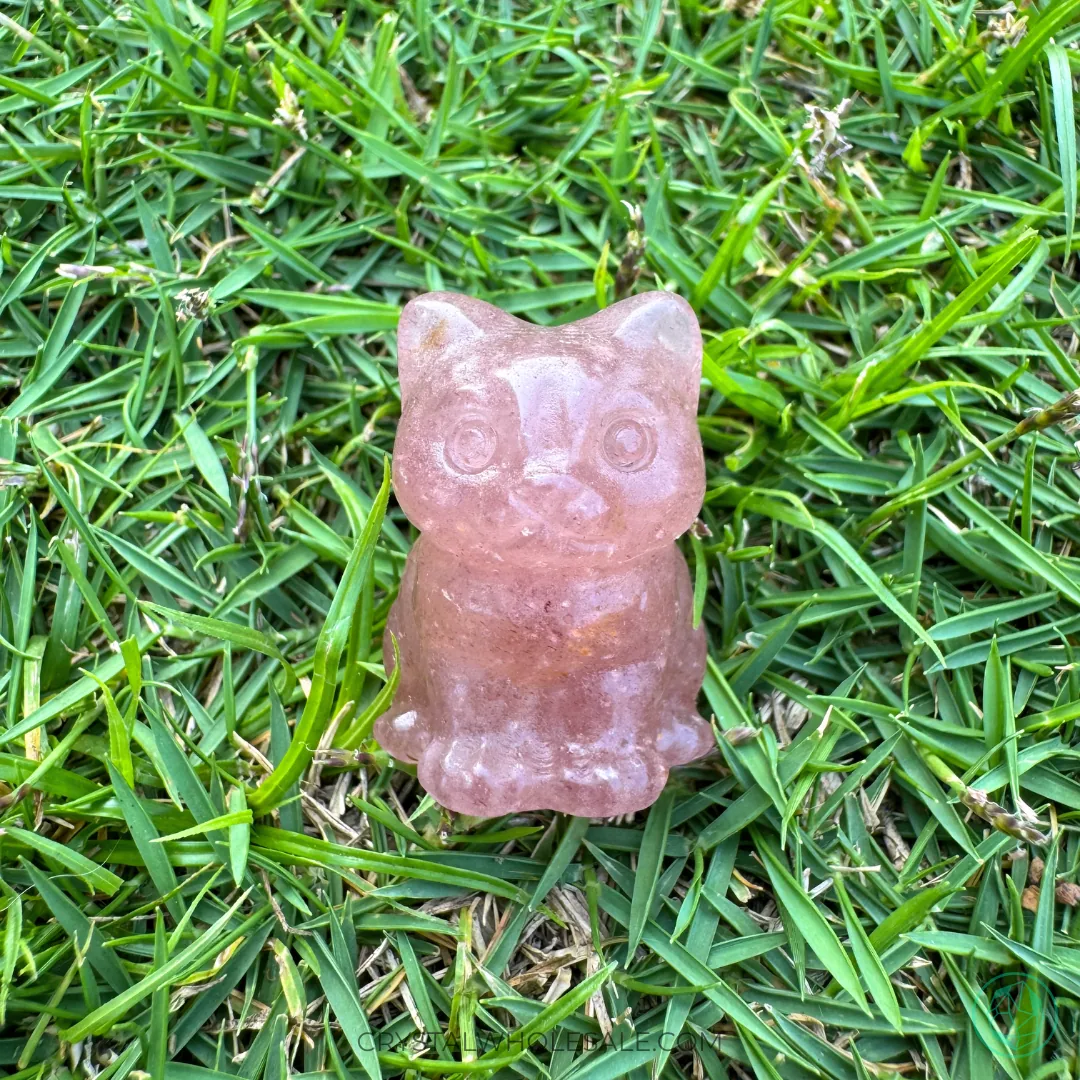
Its support for empathy and gentle expression also becomes especially clear in relationships. Before an important conversation, strawberry quartz suits the kind of state that helps the heart settle and allows expression to come through with more softness and clarity. Feelings become easier to speak, and understanding and patience are more likely to remain in the interaction. On a deeper level, its emotional soothing quality also supports the quieter, more lingering waves of feeling. It helps release that suspended feeling inside and brings a person back to a steadier inner rhythm.
On a spiritual level, strawberry quartz connects strongly with grounding, gentle spiritual connection, joyful frequency, and soft inner awareness. It makes the connection with the inner self feel more delicate and more present in everyday life. Strawberry quartz gently opens the heart, brings feelings into clearer focus, and draws attention back to the self in a natural way. It also helps restore a sense of inner warmth and emotional openness.
Its grounding quality gives spiritual experience more steadiness. When emotions, insights, and inner feelings begin to rise, strawberry quartz helps hold them in a supported state, allowing softness in the heart to settle into the body, the present moment, and daily life. This kind of spiritual support fits well with meditation, quiet reflection, journaling, or any moment meant for gently sorting through inner feelings.
Strawberry quartz also supports those who want to reconnect with themselves. It helps inner awareness return in a softer, clearer way, making it easier to notice emotional rhythms, real needs, and what the heart truly values. At the same time, it carries a light, joyful frequency, like a small warm glow gradually brightening within. It helps bring attention back to the small but genuine moments of beauty that are easy to miss. Because of that, its spiritual healing presence often feels warm, subtle, and quietly sustaining.
Strawberry quartz is best understood through relaxation, steadiness, and gentle recovery. Its effect is often felt as a gradual release of built-up tension, a softer body state, and a calmer overall rhythm.
This kind of support fits especially well at the end of the day or after periods of busyness and depletion. Strawberry quartz helps the body settle into a state that feels more open, quiet, and at ease, making recovery feel smoother and more natural. It brings a steady, gentle sense of support that helps both body and mood settle into a more comfortable state.
| Property | Description |
| Luster | Vitreous |
| Transparency | Transparent to translucent, with clarity reduced in areas where inclusions are more densely concentrated |
| Streak | White |
| Cleavage | None |
| Fracture | Conchoidal |
| Tenacity | Brittle; more likely to break along a fracture than split in a regular pattern under impact |
| Specific Gravity | Approximately 2.65 |
| Refractive Index | 1.544–1.553 |
| Birefringence | Approximately 0.009 |
| Optical Character | Uniaxial positive |
| Typical Internal Features | Visible red to pink inclusions; under magnification, these may appear as elongated forms, hexagonal platelets, irregular flakes, or fine reflective fragments. Inclusion patterns can vary significantly from one specimen to another. |
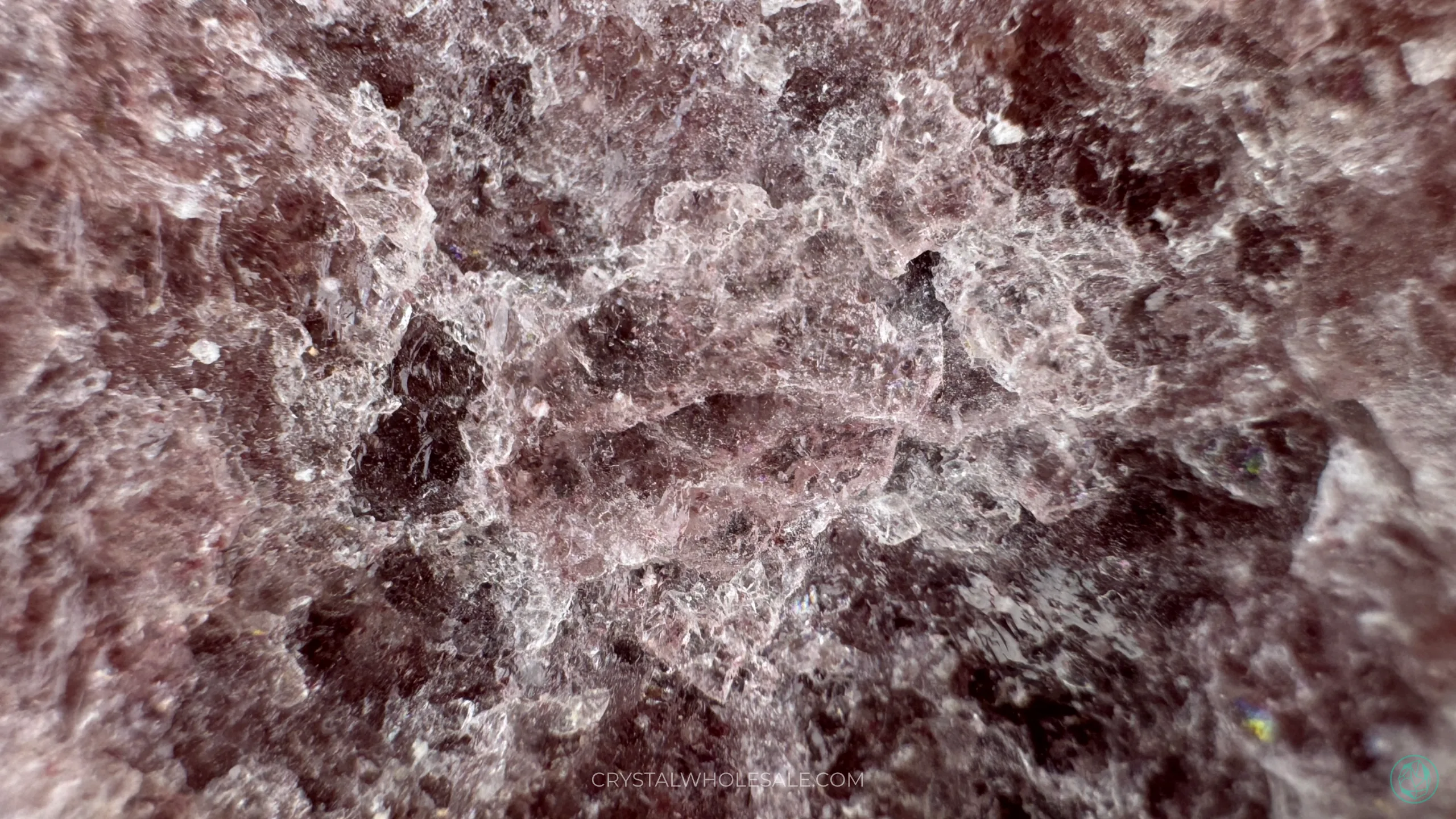
Strawberry quartz belongs to the quartz family, with quartz as the host mineral and silicon dioxide as its main composition. It is a quartz-based material with visible red to pink inclusions, so it retains the clarity and vitreous luster typical of quartz while showing a much more distinctive internal structure than ordinary colorless quartz. Its red-pink tones and internal appearance come mainly from red to pink mineral inclusions within the crystal, including hematite, lepidolite, alurgite, and piemontite.
The most distinctive feature of strawberry quartz is its transparent to translucent quartz base with visible red to pink inclusions inside. Its color usually ranges from pale pink and berry pink to deeper reddish pink, with the intensity shaped by the number of inclusions, their particle size, how densely they are distributed, and the way they reflect light. To the naked eye, the interior often shows red-pink structures in dotted, flaky, fine needle-like, streaked, or cloud-like forms, creating the seed-like visual effect that gives the stone its strawberry-like character. In higher-quality material, light may also reveal a subtle sparkle or aventurescent reflectance.
The formation of strawberry quartz is tied to the growth of quartz crystals. As silica-rich hydrothermal fluids or other mineralizing fluids crystallize under suitable conditions, quartz gradually forms, while red to pink mineral particles enter the crystal at the same time and are ultimately preserved as inclusions. These enclosed mineral components are what give strawberry quartz its distinctive red-pink color and internal texture. Quartz is widely distributed in igneous, metamorphic, and sedimentary environments. In single-crystal strawberry quartz, a typical formation pattern involves quartz trapping red mineral particles during growth, while in some granular or quartzite-type materials, the color and shimmer may be related to aligned flaky minerals formed through metamorphic processes.
Representative sources of strawberry quartz include the Shymkent area of Kazakhstan, the Uruáchic region in Chihuahua, Mexico, and Sidi Rahal in the Marrakesh-Safi region of Morocco. In published references and specimen records, Kazakhstan and Mexico remain the two most frequently discussed sources, and some material from Mexico is often used to show the fine red inclusions typical of strawberry quartz. Strawberry quartz is also found in the Andilamena area of Madagascar.
The minerals most closely associated with strawberry quartz, whether as inclusions or accompanying minerals, are those that create its red to pink visual effect. Publicly cited examples include hematite, goethite, lepidocrocite, lepidolite, alurgite, and piemontite. The type of mineral, the shape of the particles, how densely they are distributed, and how they reflect light all directly affect the final color layering, shimmer, and internal texture of strawberry quartz.
The history of strawberry quartz has early ties to the name “scarlet quartz.” In the late nineteenth century, quartz from the iron-mining region of Cumbria, England, containing fine red hematite inclusions, was described with this related term. What matters at this stage is that people had begun identifying this distinctive quartz by its color and its internal red inclusions.
By the late twentieth century, strawberry quartz had entered gemological observation and commercial trade more clearly. In 1984, material sold in the trade as “strawberry quartz” was linked to Sonora, Mexico, marking the point at which it began to move from an unusually colored quartz into a material with a more defined market identity.
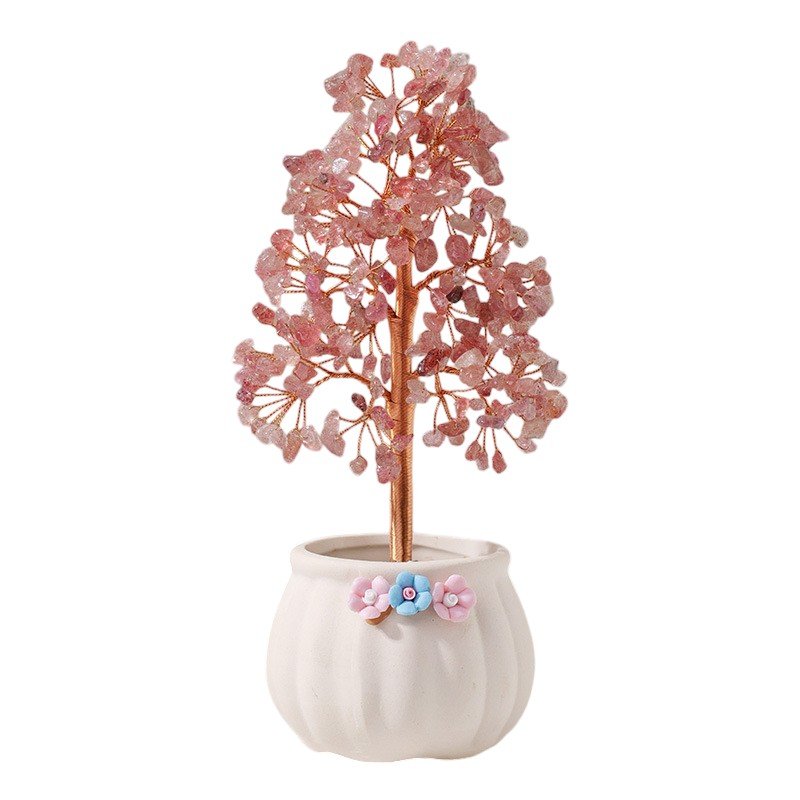
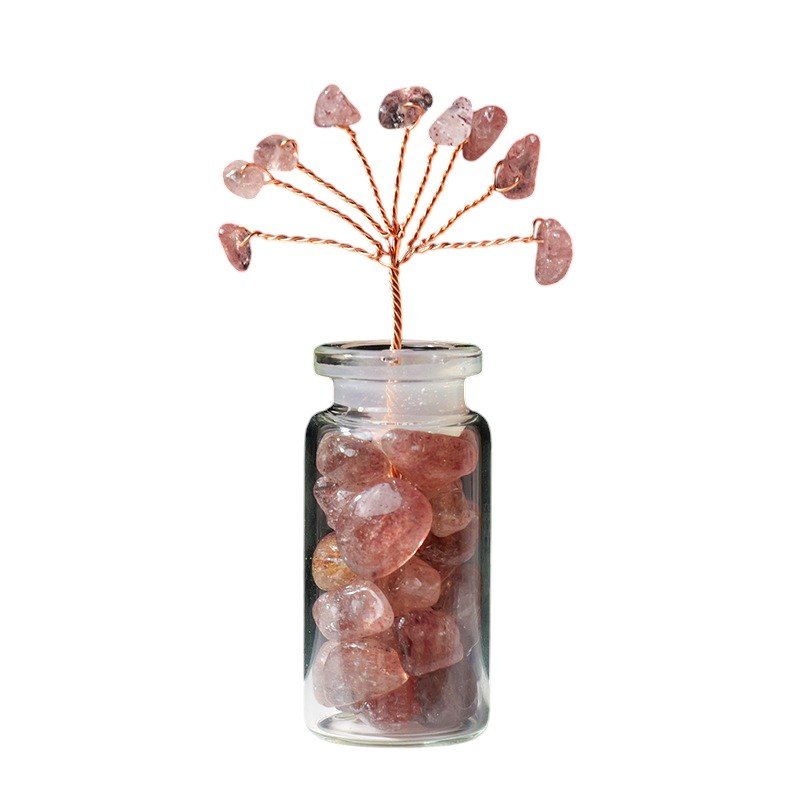
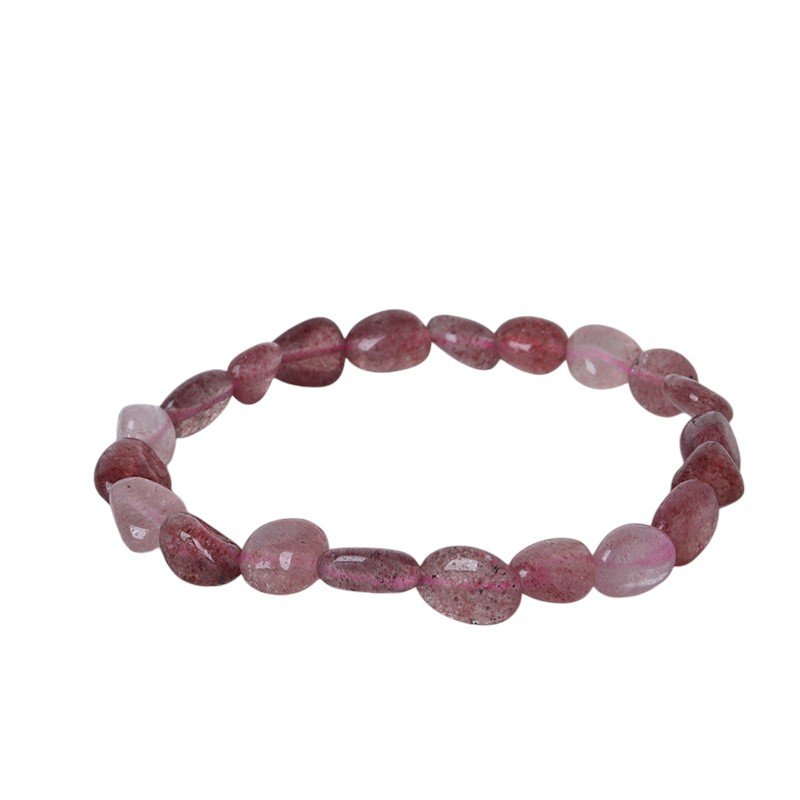
Through the 1990s and 2000s, strawberry quartz gained a stronger presence in the international mineral-collecting and jewelry market. In more recent crystal culture, its meaning also settled more clearly around gentle love, emotional soothing, warmth of heart, and a grounded sense of connection. It also became more common in bracelets, bead strands, meditation stones, and small decorative pieces.
Strawberry quartz is often used for emotional soothing, gentler interaction in relationships, self-acceptance, and helping the inner state gradually return to a warmer, steadier place.
No, they are not the same material. Strawberry quartz gets its red-pink appearance mainly from visible red mineral inclusions inside quartz, while rose quartz has a different cause for its pink color. It is also not the same as red aventurine. Red aventurine often shows a more noticeable glittery effect, while strawberry quartz is defined more by its red-pink inclusions within a transparent to translucent quartz base.
Because strawberry quartz is quartz-based, brief contact with clean water is usually fine, and gentle cleaning is generally safe. However, quartz is still somewhat brittle, so pieces with obvious cracks, heavy inclusions, polished finishes, or uncertain material origin should not be soaked for long periods, exposed to strong sun, or subjected to repeated hot and cold temperature changes.
Representative sources of strawberry quartz include the Shymkent area of Kazakhstan, the Uruáchic region in Chihuahua, Mexico, Sidi Rahal in Morocco, and the Andilamena area of Madagascar.