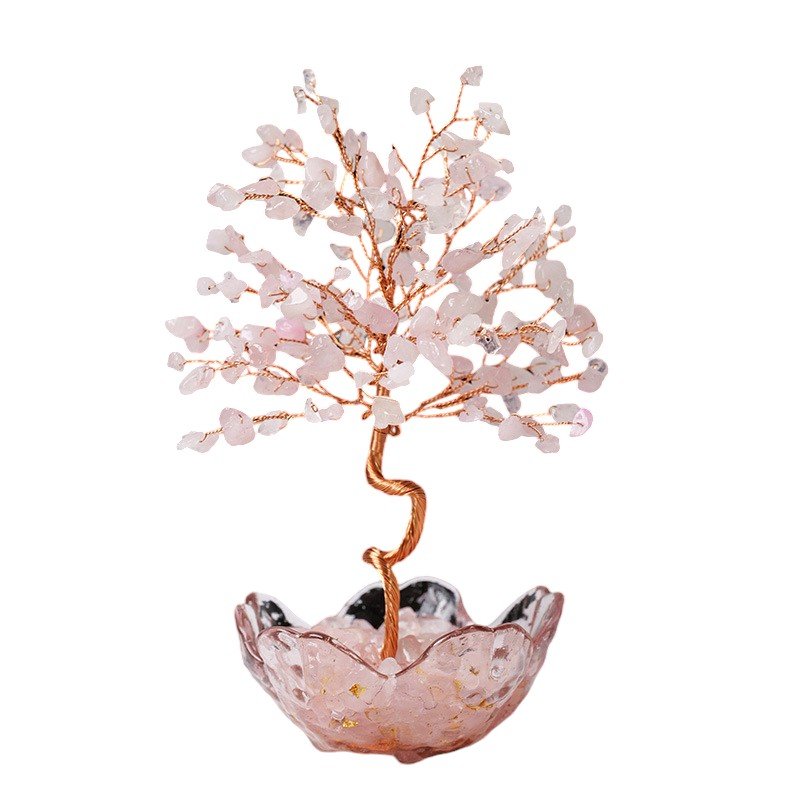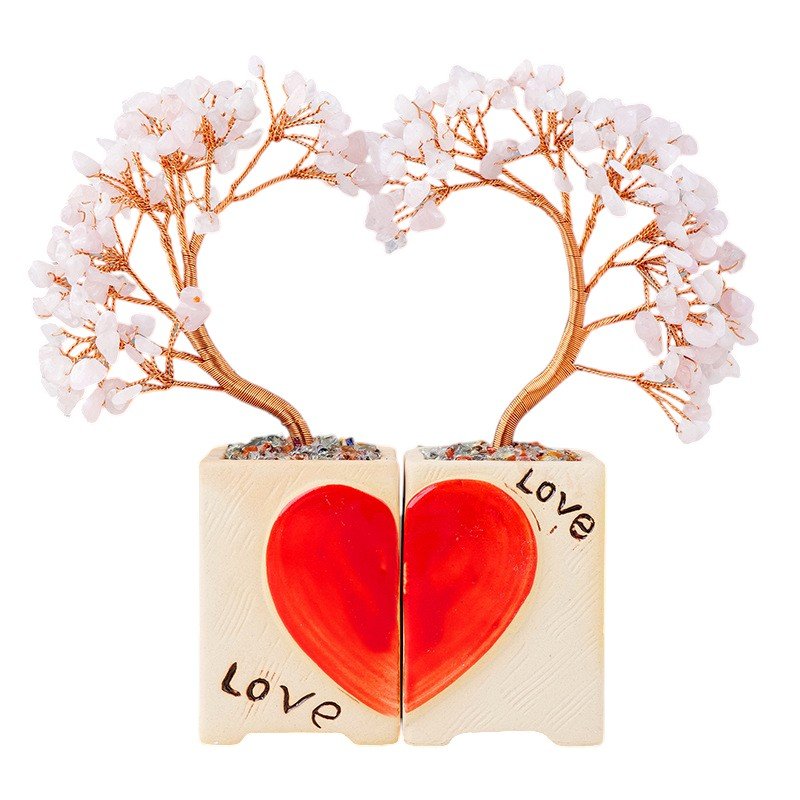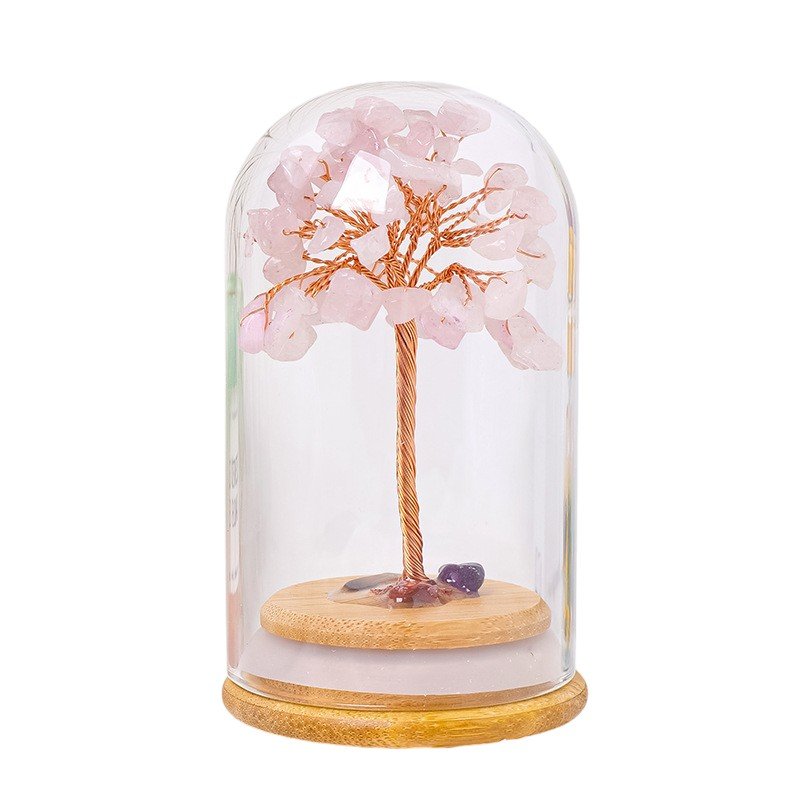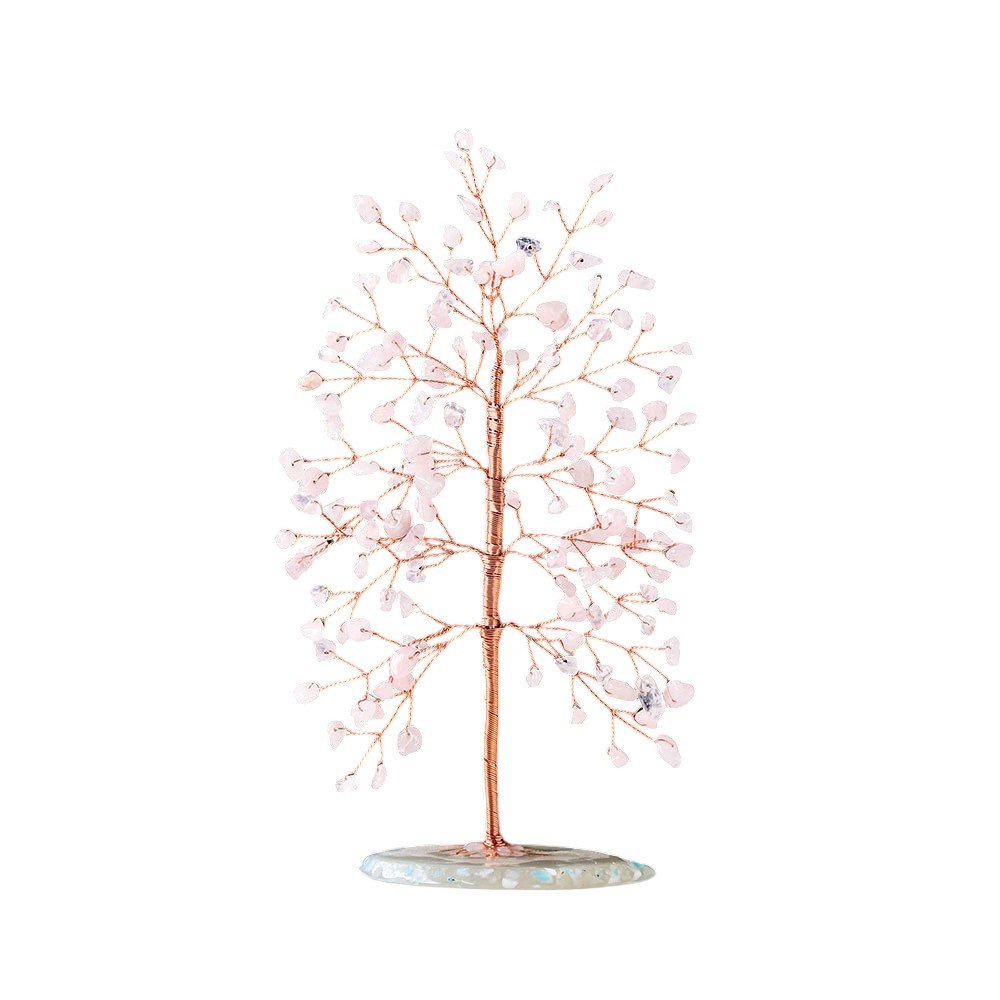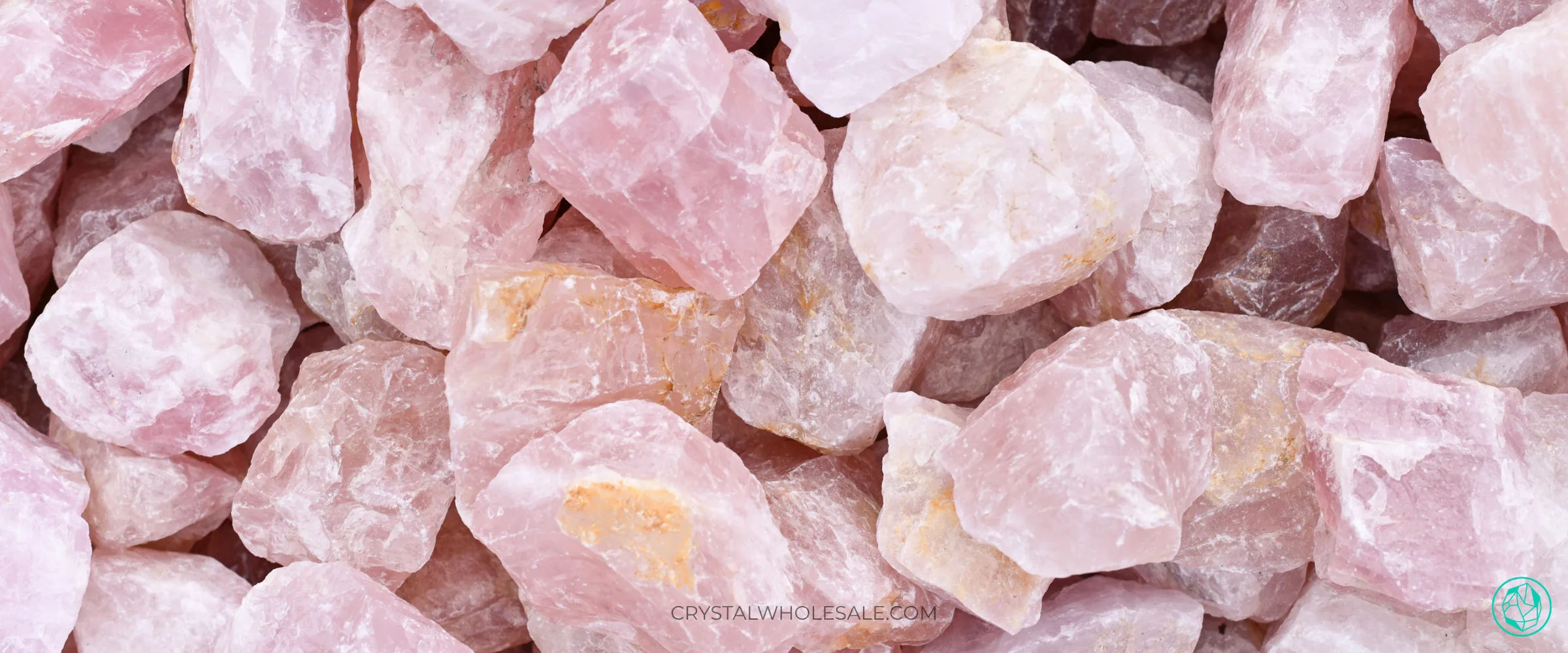

Rose Quartz Hexagram Carving 1.18 in
$16.48 ~ $20.60


Meaning, Spiritual Symbolism, Healing Properties, Mineralogy & History




Rose quartz is a pink variety of quartz in the quartz family, with silicon dioxide as its main chemical component. Its color ranges from very pale pink to a soft rose pink, with a gentle, quiet overall look. The pink color of rose quartz mainly comes from extremely fine fibrous inclusions inside the quartz. These inclusions are tied to a borosilicate mineral related to dumortierite, and charge transfer involving iron and titanium is the key reason rose quartz appears pink to rosy pink.
Rose quartz corresponds to the heart chakra, and its core meaning is gentle love. It is also known as the stone of love. This is not the intense, outward, burning kind of love. It is softer, steadier, and easier to let into everyday life over time.
That sense of love often brings romantic relationships to mind first. Rose quartz is used for attracting love, repairing relationships, easing emotional tension, and bringing communication back to a softer place. But its meaning does not stop with romantic partnership. It also speaks to a wider kind of love, one that fits just as naturally in the context of family, friendship, and a person’s relationship with the self.
The symbolism of rose quartz comes from a story in Greek mythology. In that story, Adonis was a young man known for extraordinary beauty, and even Aphrodite, the goddess of love and beauty, fell deeply in love with him. She did not treat him as a passing lover. She gave him her heart, stayed by his side in the mountains and wild places, and set aside the ease of the divine world to be with him. But Adonis was brave and stubborn by nature, and he was especially drawn to hunting. Aphrodite warned him to stay away from dangerous beasts and not risk his life, but he did not listen. During one hunt, he was attacked by a wild boar and badly wounded by its tusks, collapsing in the wilderness.
When Aphrodite heard what had happened, she ran to him at once. She pushed through rocky ground and thorny brush, caring only about reaching him before his life was gone. By the time she found Adonis, he was already close to death. On the way to him, Aphrodite had been cut by thorns, and her blood fell to the ground. Adonis was bleeding as well. Their blood fell together onto pieces of quartz, staining what had once been ordinary stone a soft rose color. From that story, rose quartz was born, and that is why it became a stone colored by love, loss, and sorrow at the same time.
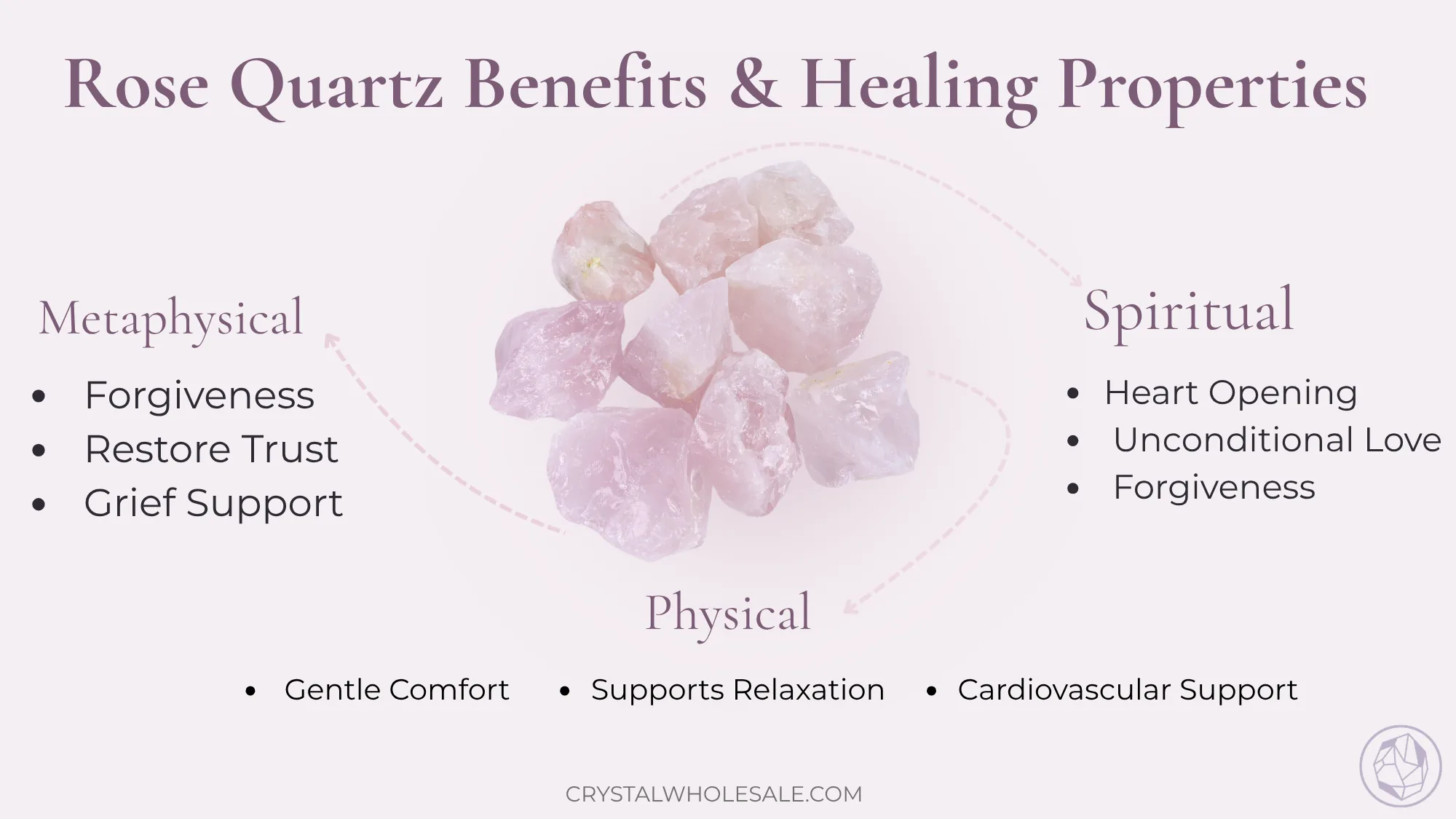
On an emotional and mental level, the most distinctive quality of rose quartz is its ability to slowly soften a state that has become too tense or too guarded. It works like a gradual loosening of the parts of the heart that have stayed locked for too long. For many people, that shift begins with forgiveness. Here, forgiveness does not only mean letting go of resentment toward others. It also means no longer gripping old pain so tightly, no longer staying stuck in hurt, disappointment, or bitterness. Rose quartz speaks to the moment when emotion steps back from conflict and the heart has room again.
Rose quartz also carries a healing quality tied to the repair of trust. After a relationship has been damaged, the hardest part is often not understanding what went wrong, but lowering the guard that stays in place afterward. The energy of rose quartz does not force immediate trust or push someone to believe in another person again too quickly. It begins by softening that hardened outer layer around the heart, creating more space to return to calm, honesty, and emotional steadiness. In many cases, trust does not come back through one conversation. It begins when the inner state is no longer held so tightly.
Rose quartz also brings a quiet kind of support during grief and emotional loss. It does not erase sadness, and it does not numb emotion. Instead, it offers a gentler place for sorrow to land after loss, longing, or heartache, so those heavy feelings do not remain at their sharpest point for too long. Rose quartz does not point to a quick emotional reset. It points to the slow settling of emotion, and to the moment when the heart begins to feel warm again.
On a spiritual level, the first focus of rose quartz is the opening of the heart. This is not an intense or forceful stone that pries the inner self open all at once. Its movement is gentler. It helps bring heart-centered energy back into flow. When someone has stayed in a state of defense, avoidance, emotional closure, or distance from connection for a long time, rose quartz speaks to the slow softening of what has been shut down. It gives the heart room to feel again, to receive again, and to respond again.
Another core quality of rose quartz is unconditional love. That love does not stop at romance, and it is not only about what is given outwardly. It also includes acceptance of the self, understanding toward others, and the ability to keep warmth alive even inside complicated relationships. What makes rose quartz distinct is the way it brings love out of dramatic expression and back into something steadier, softer, and easier to carry through daily life. It is not an emotional high. It feels more like a quiet energy that stays.
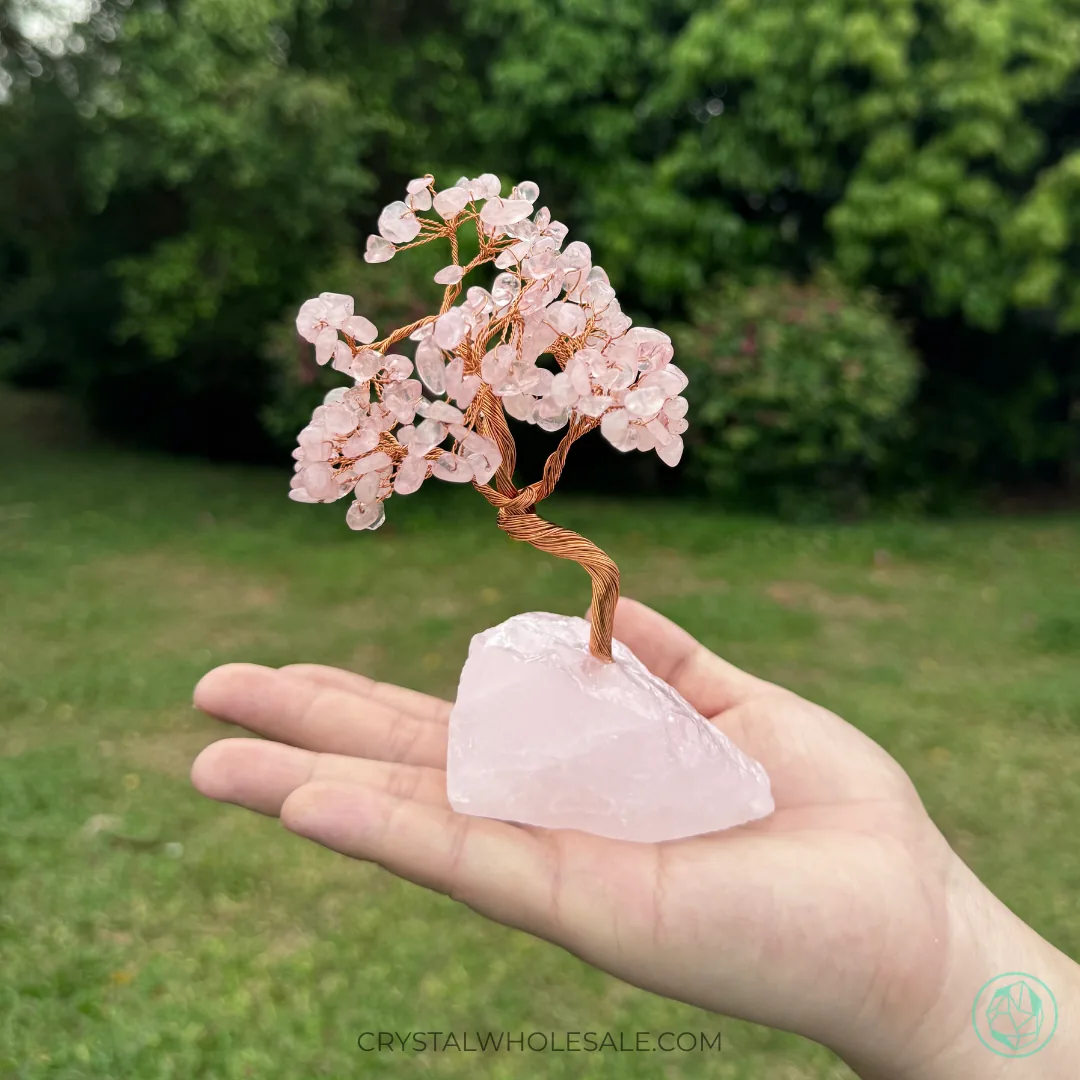
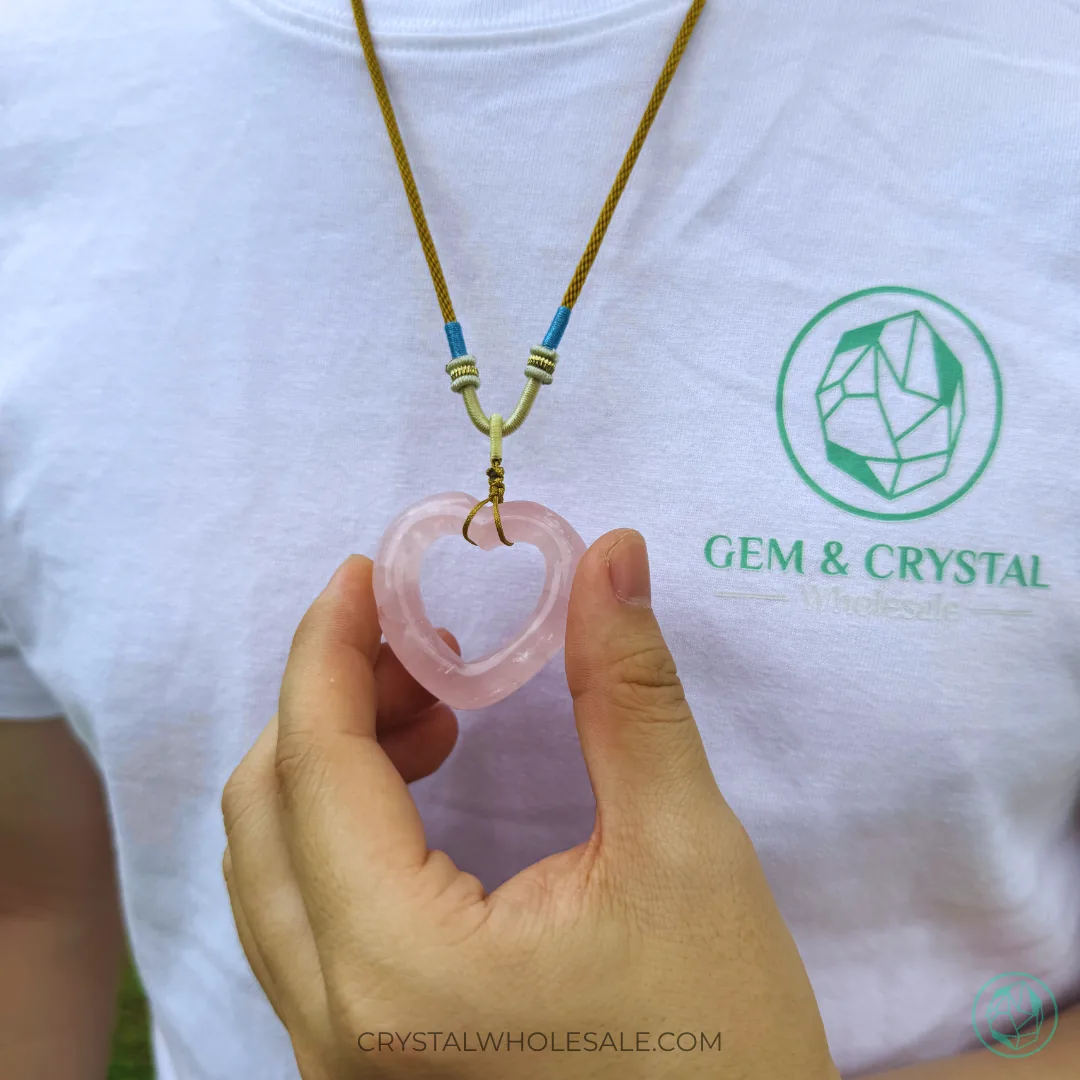
Forgiveness is also a central part of rose quartz on a spiritual level. In many cases, what keeps a person stuck is not only what happened, but the knot inside that never fully loosened afterward. Rose quartz does not force release. Instead, it gradually takes the sharp edge off built-up hurt, blame, and emotional knots. When the heart is no longer held in a constant state of tension, forgiveness has a chance to happen. From there, relationships, emotions, and the inner state can move back toward softness and balance.
In traditional crystal healing language, rose quartz leans more toward a soft, calming kind of support on the physical level. It does not feel sharp or strongly stimulating. Its presence is lighter and gentler, allowing both the body and the emotions to step out of an overly tense state.
It is also often understood in the context of rest and relaxation. Whether the goal is to slow the pace down or return the body and mind to a quieter state, rose quartz points to a more soothing and gentle kind of ease.
In traditional crystal healing, it is also placed in the context of support related to the heart and circulation. But like its overall nature, that sense of support is never forceful. The emphasis stays on softness, quietness, and emotional steadiness.
| Property | Detail |
|---|---|
| Mineral | Quartz |
| Transparency | Translucent to semi-translucent |
| Crystal System | Trigonal |
| Luster | Vitreous |
| Refractive Index | 1.544–1.553 |
| Cleavage | None |
| Specific Gravity | 2.66 |
| Fracture | Conchoidal |
| Typical Habit | Mostly massive |
| Special Optical Effect | Sometimes shows asterism (star effect) |
Rose quartz is not a separate mineral species. It is a pink variety of quartz. Its chemical composition is still silicon dioxide, and in mineral classification it belongs to quartz rather than standing as a distinct mineral of its own.
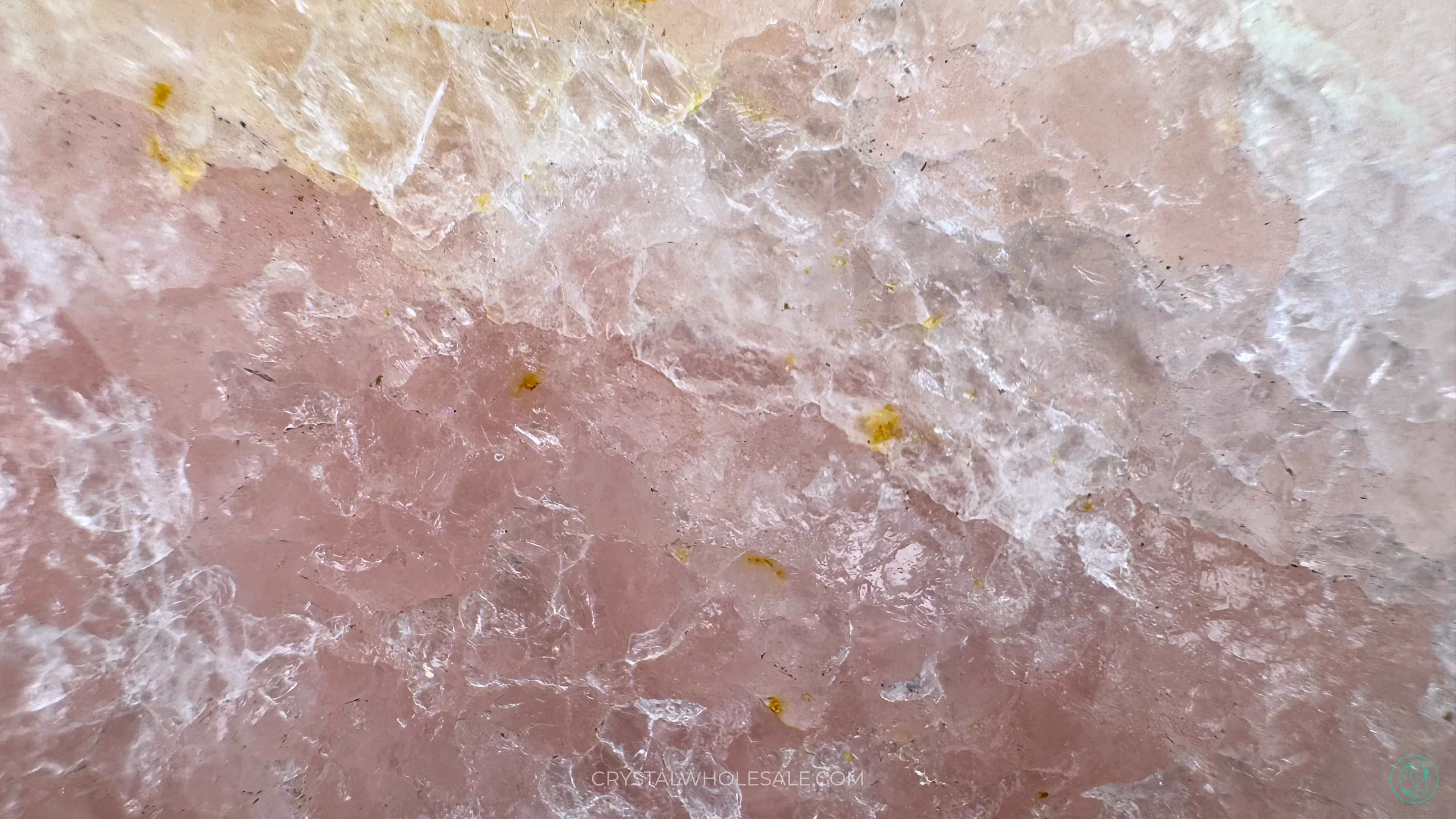
One distinction matters here. The common massive form of rose quartz and the rarer transparent pink quartz that forms crystals do not follow exactly the same color mechanism. The latter is usually referred to as pink quartz or crystalline rose quartz. It is much less common and more rare, and its color is generally tied to irradiation color centers involving aluminum and phosphorus.
Rose quartz ranges in color from very pale pink and soft pink to medium and slightly deeper rose pink. High-quality rose quartz is not necessarily the brightest or most saturated in color. The better examples are the ones with a clean tone, stable color distribution, and an overall pink appearance that stays soft without looking dull or gray.
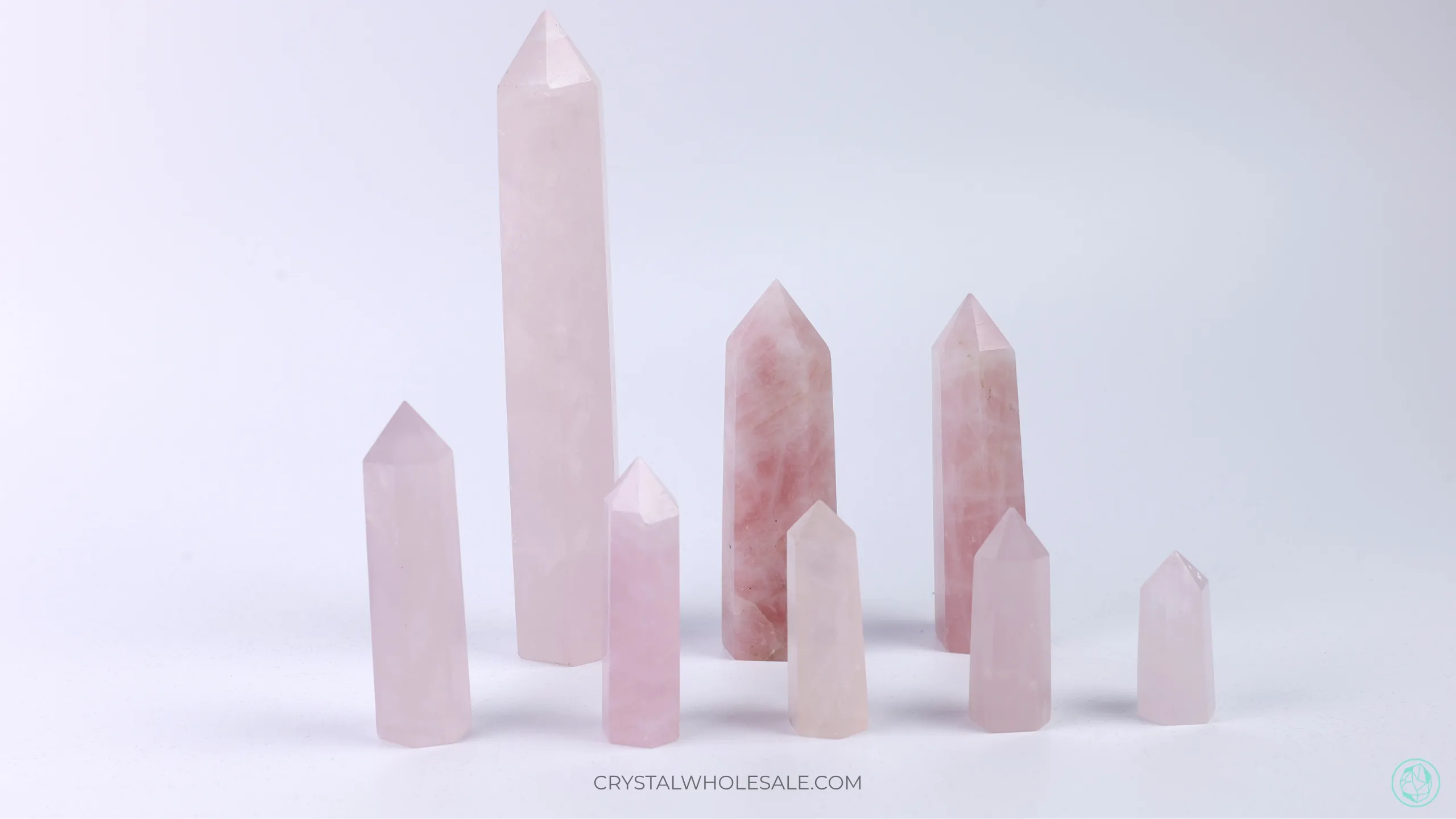
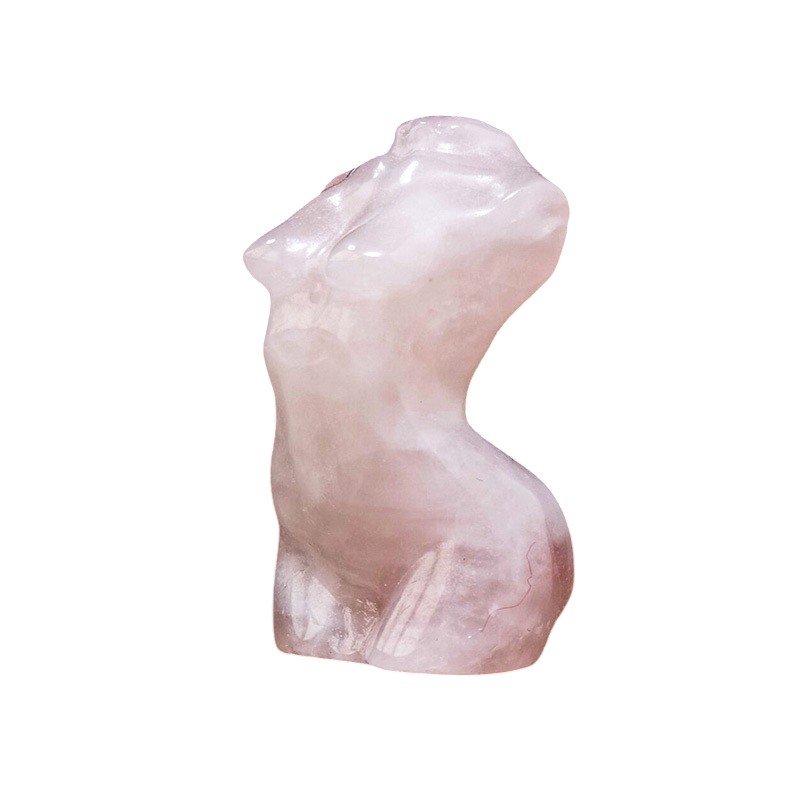
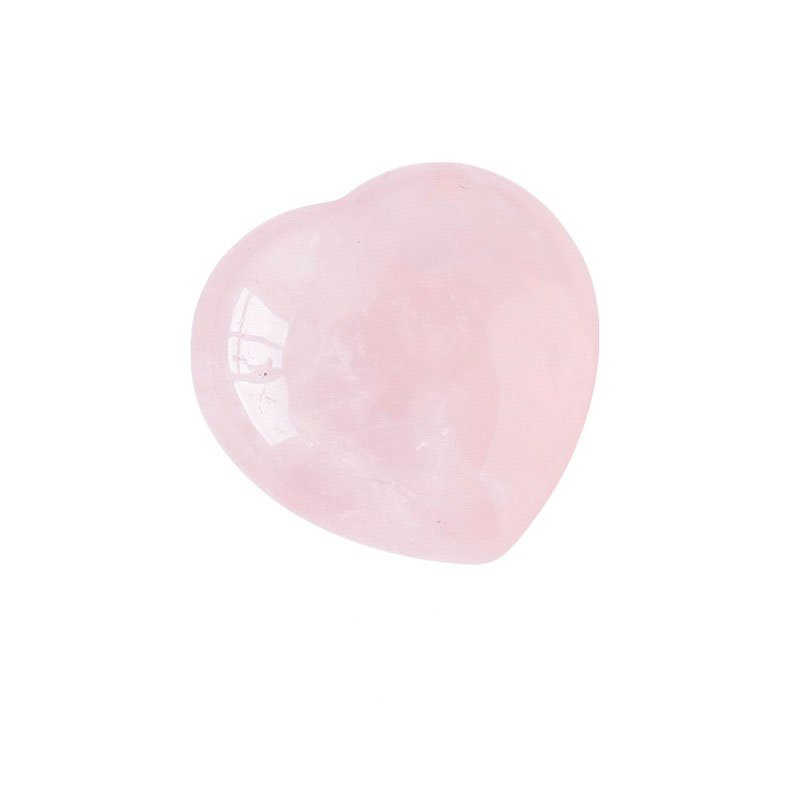
Its most typical appearance is not fully transparent. Instead, it usually shows a faint cloudy quality and an overall semi-translucent look, which gives it a soft, gentle visual character. That misty look is not a flaw. It is one of the most recognizable features of many rose quartz specimens. This cloudy translucence is tied to microscopic mineral inclusions inside the stone. For that reason, the rose quartz most commonly seen on the market is especially well suited for beads, carvings, palm stones, heart-shaped pieces, and cabochons.
Rose quartz most commonly forms in the quartz core zones of granitic pegmatite systems, usually under relatively high-temperature geological conditions. In a broader geological context, it belongs to the silica-rich products of late-stage granitic evolution.
The best-known source of rose quartz is Brazil, especially Minas Gerais. Higher-quality transparent pink crystal specimens also mainly come from Brazil. Madagascar is another common source. Rose quartz is also found at Klein Spitzkoppe in Namibia and in the Parun pegmatite field of Nuristan, Afghanistan.
Common associated minerals include albite, muscovite, orthoclase, microcline, elbaite, and smoky quartz. In the Itinga and Taquaral mining areas of Brazil, typical associations also include cleavelandite, schorl, and lepidolite.
Rose quartz has a long history. Its use goes back to around 7000 BCE, when rose quartz beads already appeared in Mesopotamia. By around 800 BCE to 600 BCE, the Assyrians were using it in jewelry.
In ancient Egypt, quartz was used as an amulet and connected with youth and the prevention of aging. In ancient Rome, rose quartz was also used for seals to mark ownership. After 500 CE, during the medieval period, quartz gradually entered both medicinal and amuletic use. Rose quartz amulets also appeared in early cultures of the Americas.
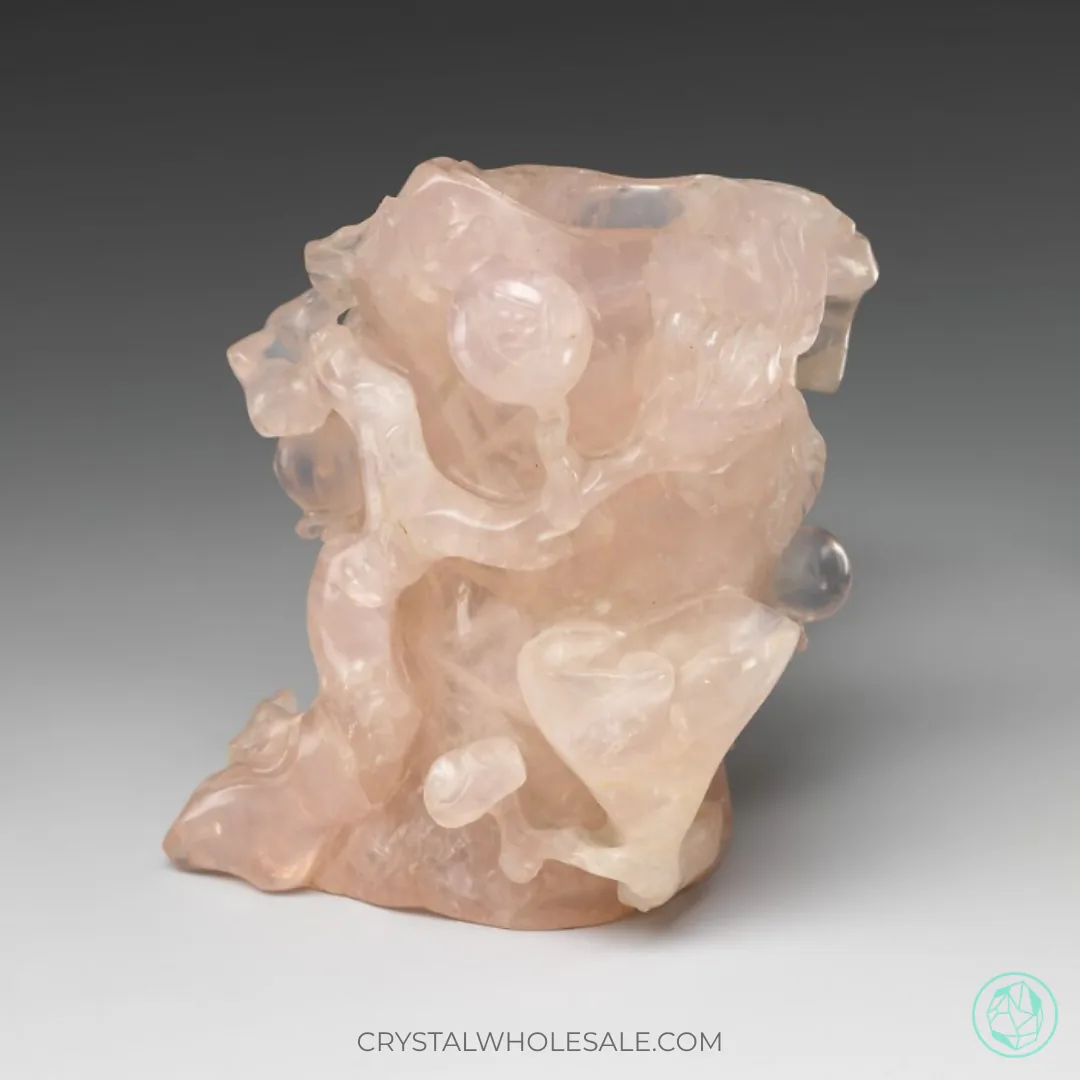
An eighteenth-century rose quartz pomegranate-shaped vase insert from Qing dynasty China shows that rose quartz was used historically for more than beads and jewelry. It had also entered the world of high-level decorative objects and hardstone carving.
The core meaning of rose quartz is gentle love. It usually points to romantic love, self-love, compassion, harmony in relationships, and a softer, steadier emotional connection.
On a spiritual level, rose quartz mainly relates to an open heart, unconditional love, forgiveness, and a softer emotional flow. What it emphasizes is not forceful change, but gentle healing and acceptance.
Because in ancient Greek legend, its color was formed by being stained with the blood of love, it has long been called the stone of love.
Rose quartz is often used for emotional soothing, self-acceptance, relationship healing, easing tension, and helping the inner state return to a softer and calmer place.
Rose quartz is usually associated with the heart chakra. It is often understood in the context of love, compassion, forgiveness, and emotional connection.
Rose quartz is not a birthstone.
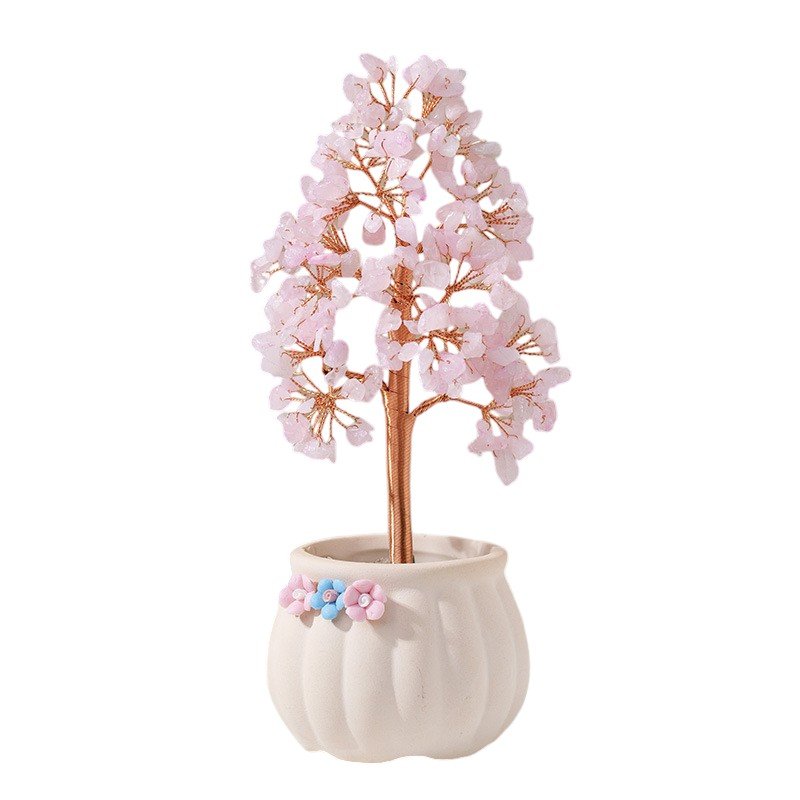
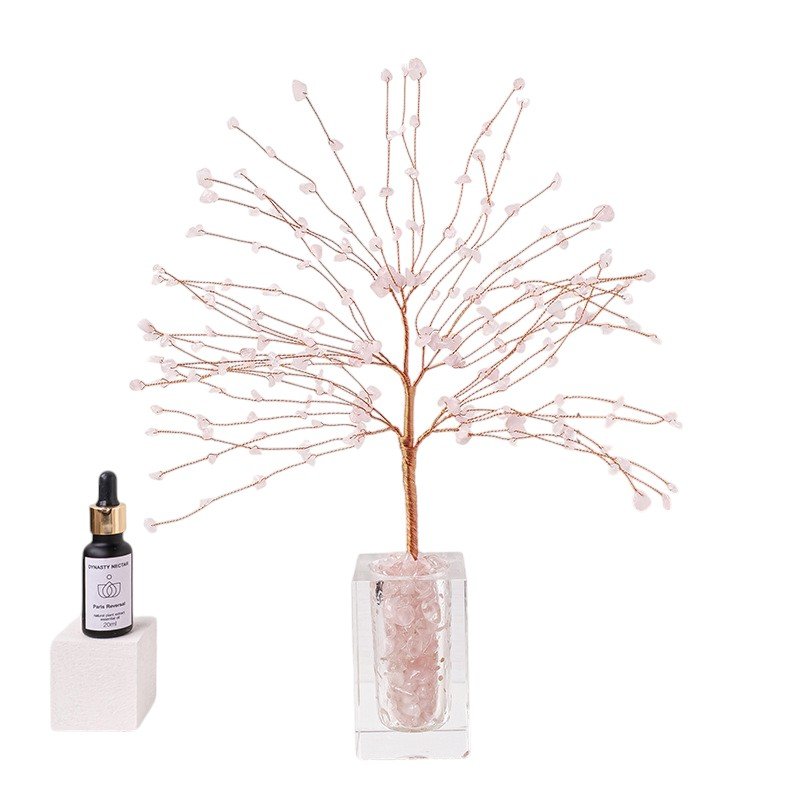
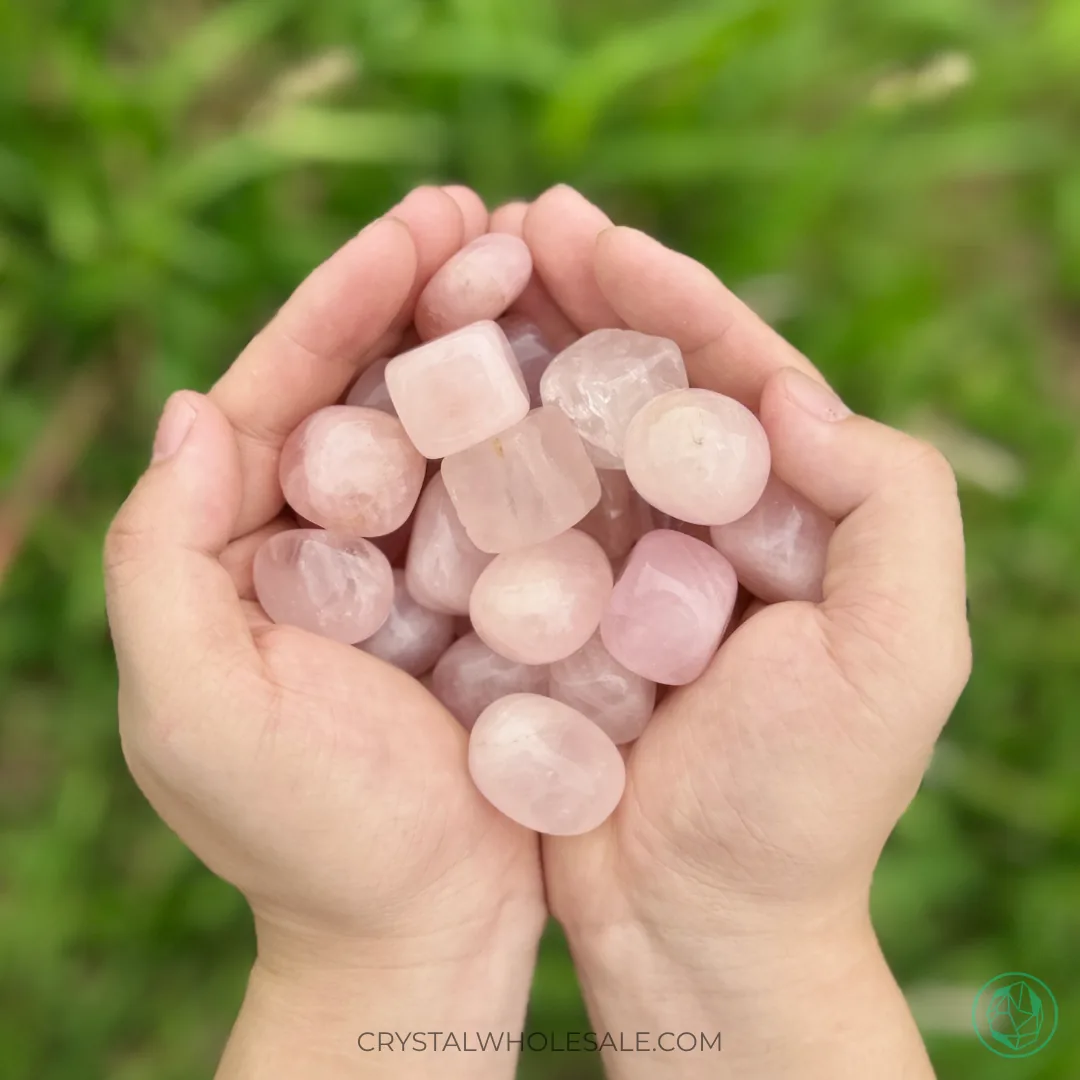
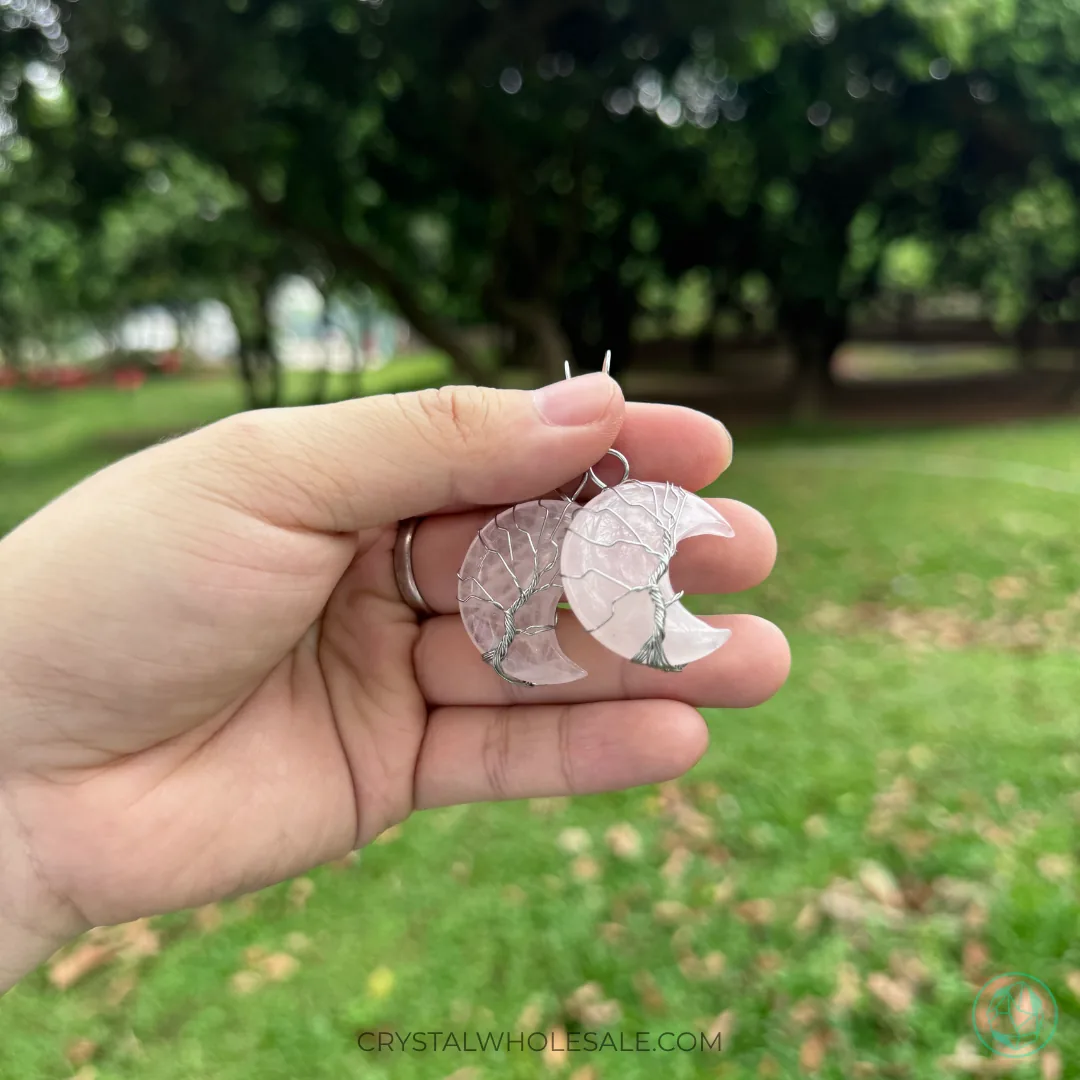
Rose quartz can be made into bracelets, pendants, palm stones, heart-shaped stones, or small decorative pieces. It is commonly placed in the bedroom, on a desk, or carried on the body. It can also be used during meditation, rest, or whenever emotional soothing is needed.
If rose quartz becomes lighter, turns white, or fades, it is related to long-term sun exposure, surface weathering, internal structural changes, or wear on the polished surface. It has not “lost its effect,” so there is no need to worry. If you feel the faded appearance is no longer attractive, you can simply choose another piece of rose quartz that you like.